FIELD JOURNAL / OLD GROUND / PRE-WORKS CHECK

The ground was checked before the first machine moved in. One signal changed the morning.

On an older property scheduled for routine ground works, a quick detector sweep was meant to rule out obvious metal hazards and forgotten hardware. Instead, one repeatable response led to a careful excavation of a weathered metal chest-like object buried below the surface.

Older property before ground works
01 — Before the work: disturbed ground, old boundaries and plenty of reasons to check first.

Old blocks rarely read like blank ground. Fence lines move, sheds disappear, fill is added, drains are rerouted and small metal fragments can remain where no current plan shows them.

The practical decision was simple: scan the accessible area before the heavier work began. The aim was not to “hunt treasure”, but to identify persistent metal responses worth marking before digging or machinery disturbed the soil. That distinction matters. A detector cannot tell you the story of an object; it can only help indicate that a conductive target may be present.

Nothing dramatic happened in the first passes. There were short, broken responses near old fasteners and scraps that behaved like ordinary shallow iron. Then one patch produced a stronger, repeatable response from more than one sweep direction.
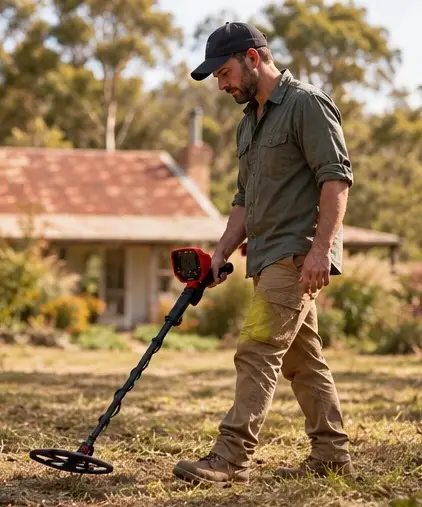

Person scanning the old property with a metal detector
02 — A controlled sweep is more useful than rushing: overlap passes and keep coil height consistent.

02 / REPEAT THE POINT

Valuable discovery found underground – everyone was surprised

The signal was “valuable” first in the practical sense: it was information worth stopping for before excavation work continued. The operator crossed the spot again at ninety degrees, reduced the sweep width and checked the surrounding soil for a broader response. The target remained localised enough to mark.

No claim was made about value, ownership, age or origin. At this stage it was simply an unusual metal response in old ground — exactly the kind of uncertainty a pre-works check is meant to surface.

Metal detector giving a repeatable signal over one point
03 — First stable response.
Ground location being checked again from another direction
04 — The same point, checked from a second direction.
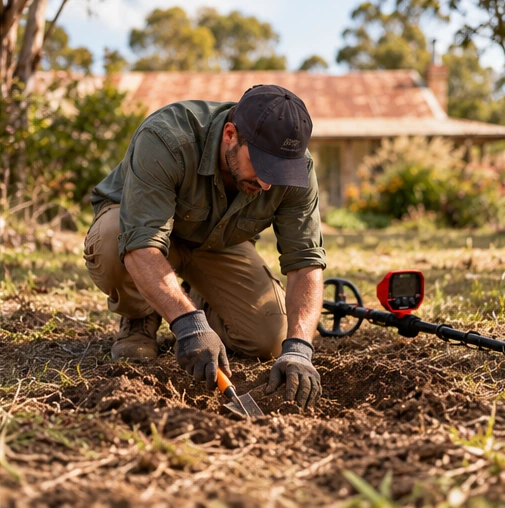
Careful hand excavation beginning at a marked detector signal

03 / OPEN THE GROUND SLOWLY

First soil, then an edge

The first excavation was deliberately narrow. Loose soil came away in shallow layers rather than with a deep cut, and the detector was used again between stages. A hard metal edge appeared before the full outline was visible.

That was the cue to widen the working area rather than lever against the object. Soil packed around old metal can hide weak points, hinges or seams; forcing it can damage both the object and the surrounding context.

Field noteMark the point. Re-scan the spoil. Photograph before cleaning. Do not infer identity from shape alone.

04 / THE OBJECT

Luxury discovery found underground – everyone was speechless

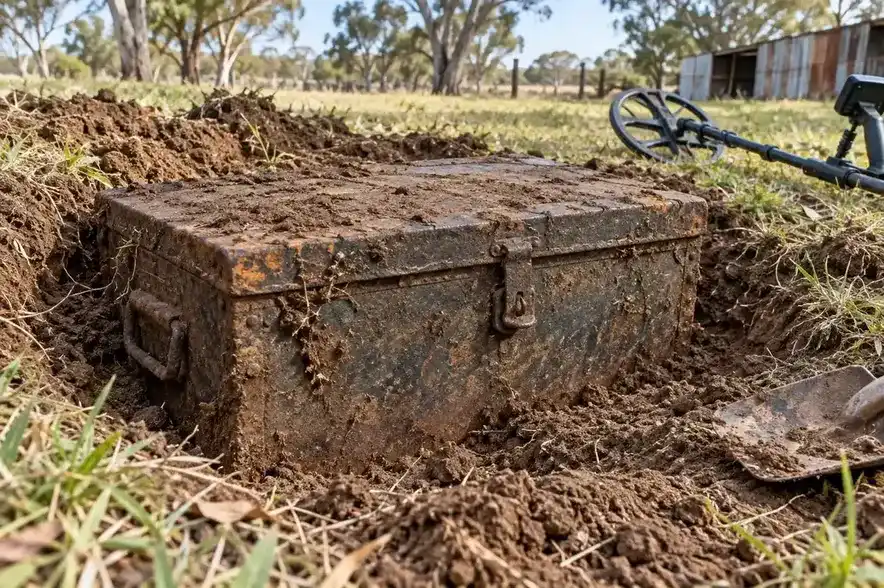
The phrase sounds grander than the reality on the ground: what emerged was an old, heavily weathered metal chest-like object, still packed with soil and showing long-term corrosion. Its contents were not opened or described here, and nothing about its owner, monetary value or exact period was established during the initial find.

The useful part of the moment was methodological. A detector had turned an invisible subsurface anomaly into a specific point that could be checked carefully before larger work continued.

Old metal chest-like object partly removed from soil, weathered and covered with earth
05 — The object after controlled exposure. No assumptions were made about its contents or provenance.

Metal detecting is a process of narrowing uncertainty, not a machine-readable label for what lies below.

The search coil creates an electromagnetic field. Conductive material in that field can produce a response that the detector processes into sound and target information. Shape, orientation, alloy, mineralised ground, nearby metal and depth all influence how that response behaves.

Experienced users therefore look for repeatability: the same response from more than one direction, a sensible target area, and consistency after reducing the sweep. Even then, the responsible conclusion is “a target is likely here”, not a claim about exactly what it is.

Close view of a detector coil moving over soil
06 — Coil control matters: level, low and overlapping passes help make responses easier to compare.

06 / READ THE RESPONSE

A useful sweep is a sequence, not a single beep.

01

Establish a baseline

Walk an undisturbed line first. Note obvious surface metal, fences and services that can produce repeatable responses.

02

Cross-check

Approach a promising signal from another direction. A repeatable point deserves more attention than a one-off chirp.

03

Narrow the area

Shorten the sweep and keep the coil level. The objective is to define a smaller working zone before the ground is opened.

04

Re-scan as you dig

Check the opening and spoil separately. Small metal fragments can move with the excavated soil and confuse the original point.

Metal detector laid out beside field tools

FROM FIELD METHOD TO EQUIPMENT

The detector used for this kind of sweep does not need to be complicated.

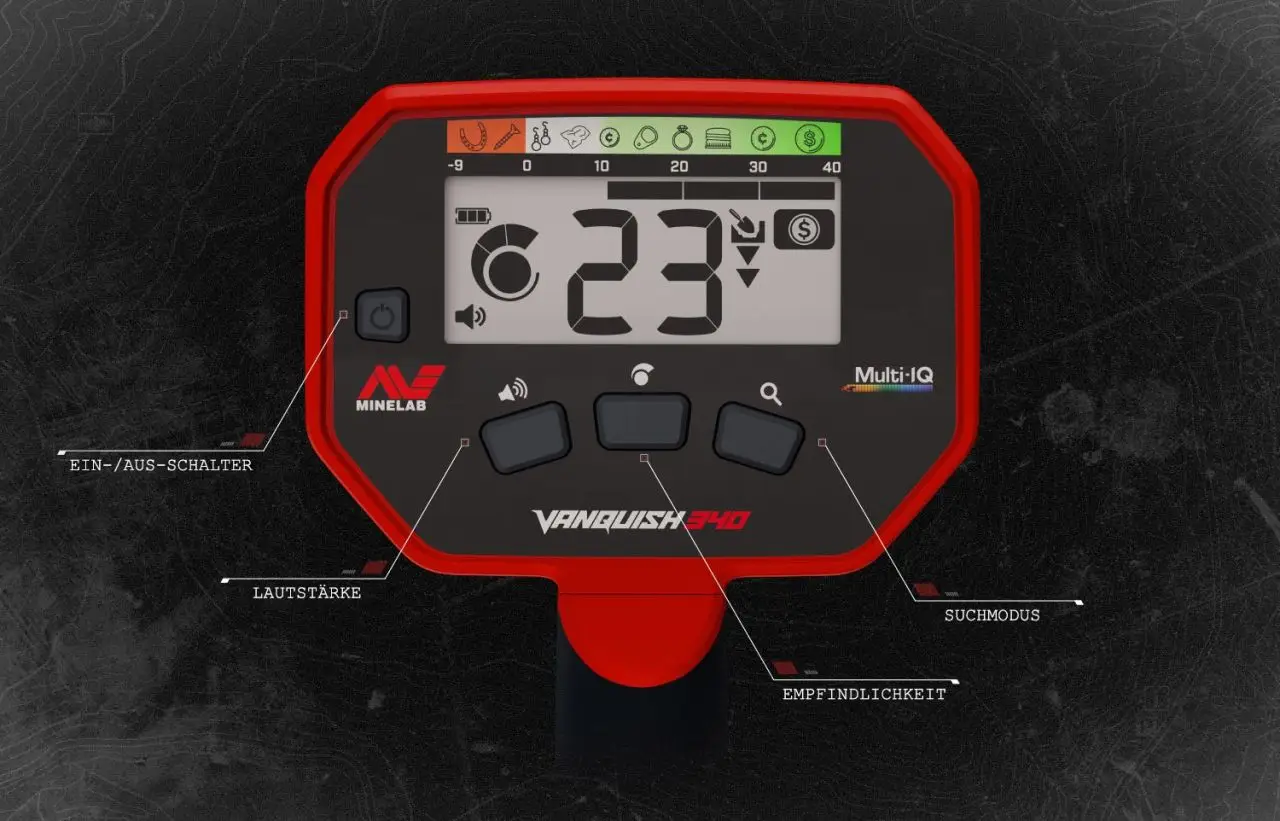
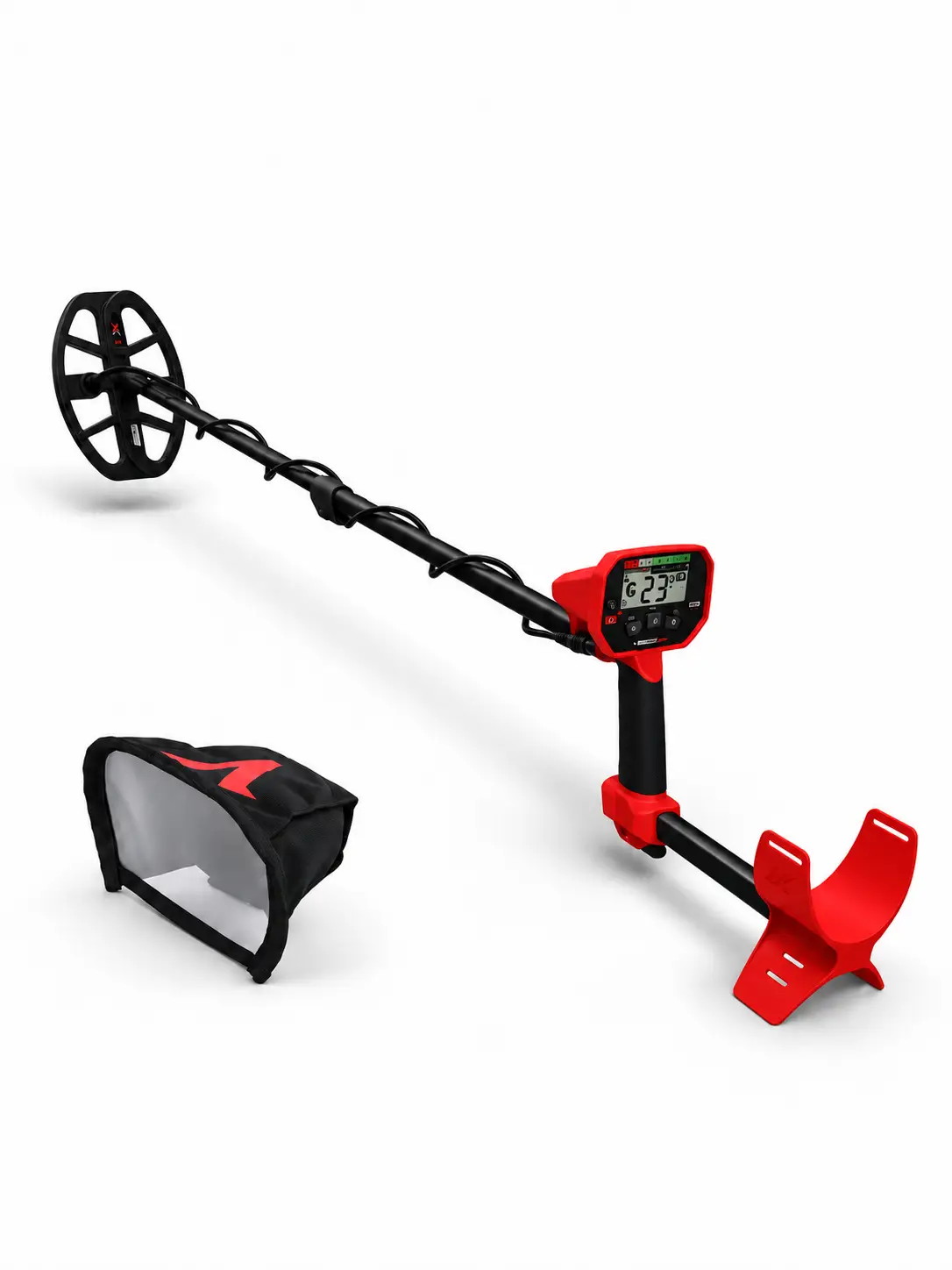
For beginners and casual field checks, the most useful controls are the ones that can be understood quickly: a small number of search modes, clear target tones, adjustable sensitivity and a coil that can handle damp ground and shallow water. That is where the VANQUISH 340 sits in Minelab’s range.

07 / THE TOOL

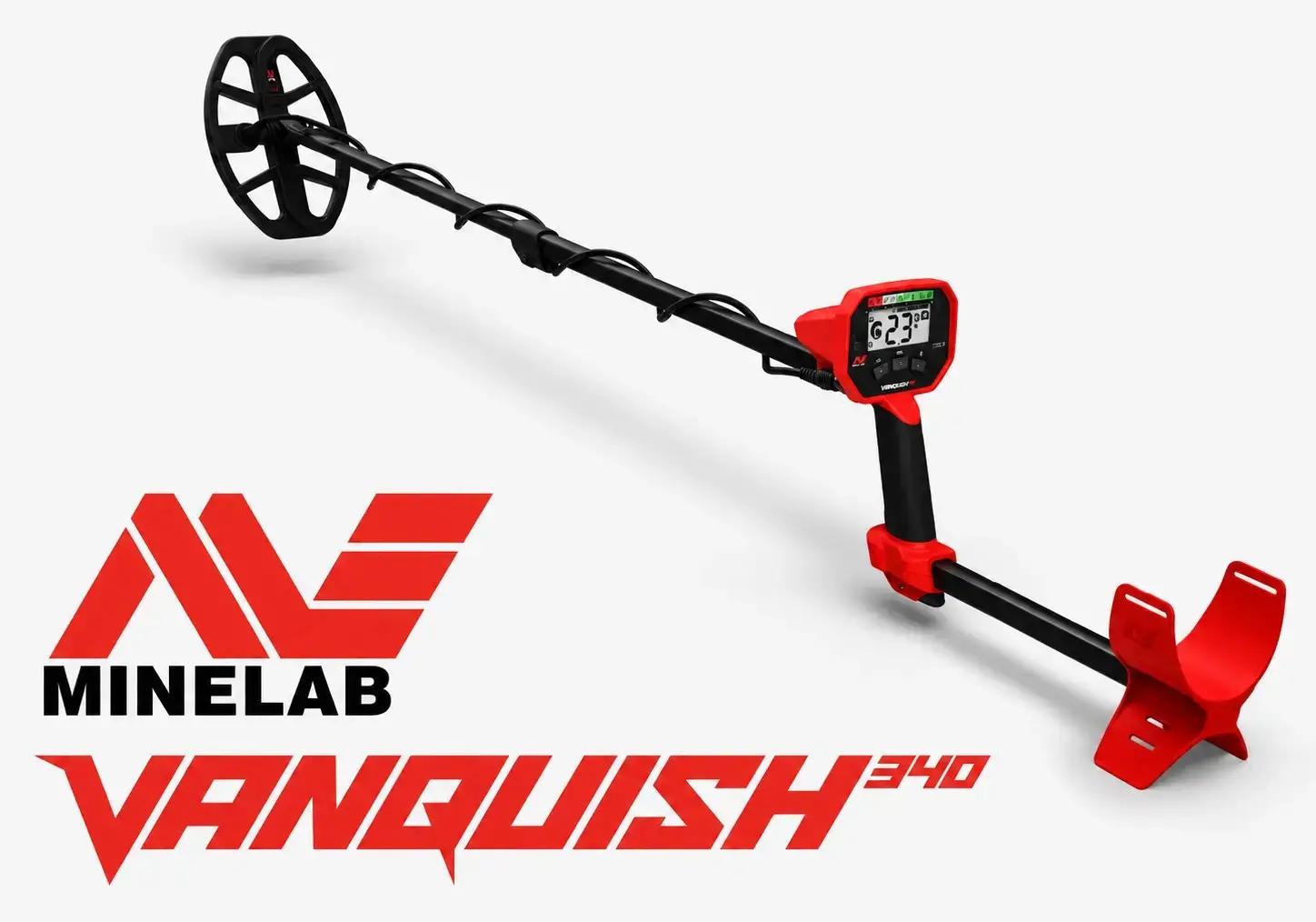
Minelab VANQUISH 340

A 1.2 kg detector built around Minelab’s Multi‑IQ simultaneous multi-frequency technology, with three search modes and a waterproof V10 10 × 7 in Double‑D coil.

Search modesAll Metal · Jewellery · Coin
Sensitivity4 levels
Target tones3 tones
Depth indicator4 levels
Collapsed length76 cm
CoilV10 10 × 7 in DD
Seller-listed price$ 459.00
View product at seller

Price shown was listed by the external seller when this page was reviewed and includes German VAT; shipping is additional. Australian destination availability, shipping charges, currency conversion, import taxes or duties, and the final checkout total are determined by the seller, payment provider, carrier and relevant authorities. Purchase, payment, delivery, returns and current terms are completed on the seller’s website.

08 / WHAT IS INCLUDED

A compact kit, without the extras you may not need.

01

VANQUISH 340 control unit & shaft

Monochrome LCD, built-in loudspeaker and 3.5 mm wired headphone output.

02

V10 search coil

10 × 7 in Double‑D elliptical coil, waterproof to 1 m according to Minelab.

03

Power

Four AA alkaline batteries are supplied. Rechargeable batteries are not listed as standard.

04

Seller bundle

The linked retailer currently lists a VANQUISH display protector with this product. Check the seller page for current bundle contents.

09 / BEFORE YOU CLICK

Know what this model is — and what it is not.

The VANQUISH 340 is intentionally simple. It does not have wireless audio, a backlit display or a pinpoint mode, and the control box is not waterproof. For a user who values low weight, straightforward controls and Multi‑IQ operation, those trade-offs may be acceptable; users who need advanced adjustment or full submersion should compare other models before buying.

Check current seller terms & availability

10 / FAQ

Questions before taking a detector into the field.

No. Minelab specifies the supplied coil as waterproof to 1 m. The detector’s control box should not be treated as submersible.

No. The VANQUISH 340 does not include a dedicated pinpoint mode. Users narrow a target by shortening and crossing sweeps.

No. Target information is an aid, not a guaranteed identification. Metal composition, shape, depth, orientation, soil and nearby targets can all affect the response.

Access, digging and heritage rules can vary by land manager, state, territory and site. Obtain permission where required, respect protected areas and confirm local rules before detecting or disturbing ground.

All purchase steps occur on the external seller’s website. The seller controls stock, checkout, payment methods, shipping destinations, final price and return conditions.